
How much do we need to know?
Big Country's Stuart Adamson's bio walks the line

Revisionist history is a royal pain in the ass. Something happened that we all saw, understood, were upset about and filed away in our memory bank. Then later, somebody says “No, that’s not what happened at all.”
I can think of several recent examples - and so can you - but let’s go all the way back to the Civil War and those who claim it was about “states rights.” Right. Sure, it was. It was about the state’s rights to hold slaves.
When Hunter Thompson, in maybe his last really great story for Rolling Stone, took on the Roxanne Pulitzer divorce trial in 1982 - where else could that have taken place but Palm Beach? - one little nugget of wisdom still rings true with multiple applications. “The servant problem is the Achilles’ heel of the rich,” Thompson wrote. “That is the weak reed, a cruel and incurable problem the rich have never solved—how to live in peace with the servants.”
In other words, there are going to be those people who will defy a Non-Disclosure Agreement and tell you what’s really going on - as they see it. Some people are always willing to spill the beans. Lay it all out there. And sometimes, geez, we’re better off if we don’t know.


The late Stuart Adamson, the lead singer, principal songwriter and guitarist for the band Big Country is the topic of a new book by Scott Rowley. And according to one book review by Banjo on the website “Louder Than War,” is this something we need to know? Does it really help us understand him and his music?
Here’s an excerpt: “Single and album chart success followed, both at home and in the US, and Big Country were soon hot property, but the touring and recording schedules didn’t sit well with Adamson, who longed to be at home with his wife and kids,” he writes. “There are several reports of him threatening to walk off tours and out of studios unless his first wife, Sandra, was there with him. Sandra is rightly quoted extensively throughout the book and comes across as a grounding force in Adamson’s life, unimpressed by the life of a successful musician to the point that she opted to stay in the hotel when Big Country supported Queen at Knebworth, rather than join in what must have been a momentous occasion.
It may be the result of selective editing, but Sandra does come across as having little sympathy, empathy or enthusiasm for what her husband is doing and going through. Although, to be fair, this may also be the result of living with someone who was a chronic alcoholic and serially unfaithful. I must admit that I had no idea about the extent of Adamson’s problems with drinking, but alcohol and alcoholism play a huge part in Adamson’s story. One sad part of the story is that Adamson stayed sober for over 14 years, only to spectacularly fall off the wagon later.
Talking of the lack of support available for this kind of thing at the time, Bruce Watson says “If you went to the label and said ‘I’m having a nervous breakdown’ they’d drop you. There wouldn’t be any sympathy” and “You didn’t really talk about things like drinking because we were all ‘blokes’ and we all drank. So the problem would be, well, you haven’t had enough to drink.” He also sadly acknowledges that things may have been different if Adamson could have weathered the storm, concluding that “He would have been much happier now, I think, wouldn’t he?”
Now, I love Big Country, have all their albums and think their “Steeltown” album is one of the great undiscovered and unappreciated albums of 1984, the year Bruce Springsteen took over the world with “Born In The U.S.A.” It was No. 1 in the U.K. but didn’t do much here, only reaching No. 70 on the Billboard charts. And Watson’s comment, about the record label, is telling, isn’t it?
Since I’m a big fan, you would think I would be the target audience for Rowley’s tell-all book about Adamson. Just this morning, I watched (and tried to decipher his Scottish accent) a YouTube video with fellow Big Country guitarist Bruce Watson, who talked about his time in the band, Stuart’s alcoholism, how he was unable to help him, how on “Monday, he was Stuart. On Tuesday…”
True, Bruce Watson is not exactly a “servant” like Hunter suggested. He was an important member of the band and sure, he’s got a right to talk about those days like anyone else. There certainly was compassion in his voice when he talked about his old bandmate and his sad ending. But would it have been asking too much for him to simply say, “Well, we made some great records together. That’s all I need to say about Stuart Adamson and my time with Big Country.” Wouldn’t that have been better for all of us, for Adamson’s family, maybe even his ex-wives? Classier? Is full disclosure always the answer?
I know people love dirt. It wasn’t like Watson was trashing the guy - he wasn’t. But my question is, did we really need to hear all that. Can’t some things stay private?Maybe I’m in the minority but why would I want to read about the poor guy’s losing battle with alcoholism, his suicide just a few days before Christmas at the Best Western in Honolulu in 2001 instead of the fantastic music they created together?
How is a book like that going to make me appreciate their music, his songwriting, guitar playing and singing? I could figure out that he was a deeply troubled guy, committing suicide in Hawaii at age 43. Isn’t that enough?
Not having read Rowley’s book, maybe it’s unfair of me to criticize him for writing it. Adamson was a rare talent and maybe the book really does celebrate his recordings and life, as well as give us the gory details about how it ended. Maybe it’s a story that needed to be told but somehow, I doubt it.
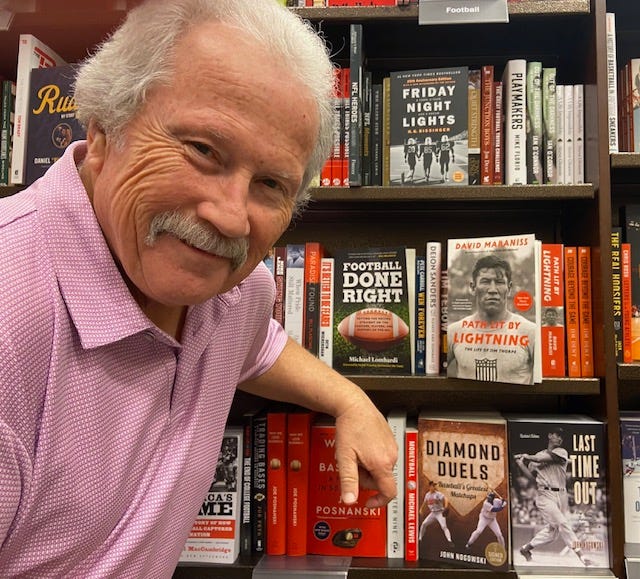
Author John Nogowski has written several books, these two about baseball - “Diamond Duels” and “Last Time Out” and two books about music: “Bob Dylan: A Descriptive, Critical Discography and Filmography” and a similar volume about Neil Young, due later this year, a book about his experience teaching Mark Twain’s “Adventures of Huckleberry Finn” at a struggling minority high school in Florida. He’s a regular contributor to the Hartford Courant and is currently at work on a book on Bruce Springsteen. He’s written a free Substack on various topics since May of 2024.
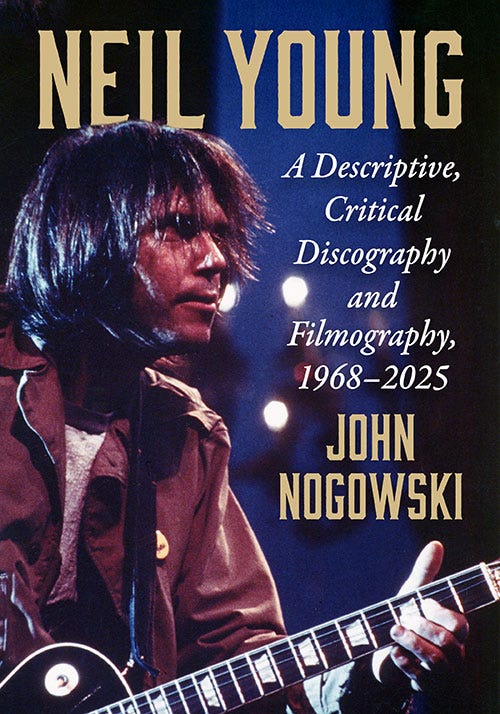
Due later this year or early next - “Neil Young: A Descriptive, Critical Discography”
I'm not sure it's fair to criticize a book you haven't read. When writing a biography, you can't ignore the unsavory parts. As for Bruce Watson - he was Stuart's childhood and lifelong friend, not just a band mate.